Featured

US mortgage delinquency rates fall to all-time low

By Safiyah Riddle

August 10, 20233:57 PM CDTUpdated 2 days ago

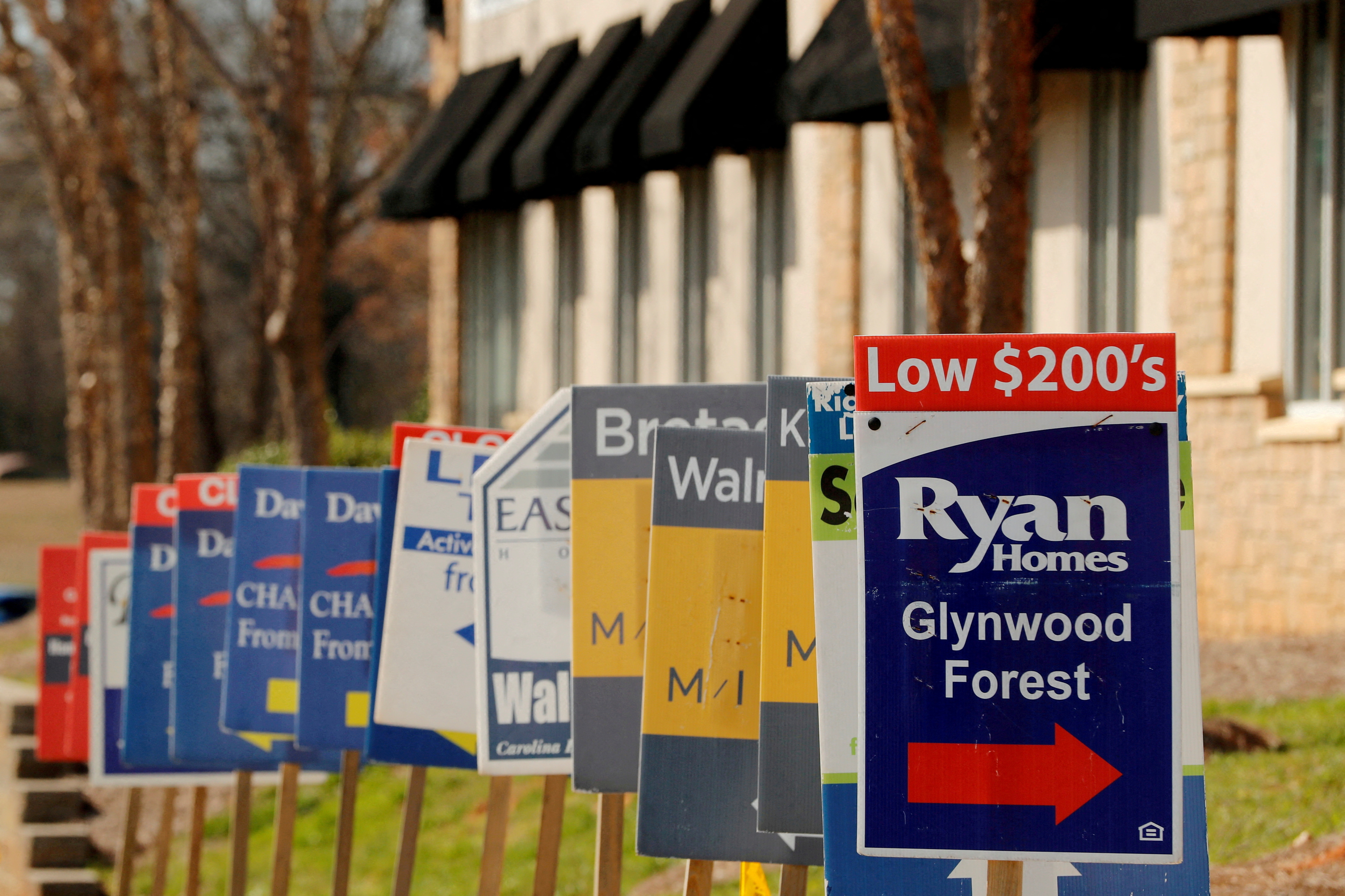
Real estate signs advertise new homes for sale in multiple new developments in York County, South Carolina

Aug 10 (Reuters) – U.S. mortgage delinquency rates fell to a record low in the second quarter due to a strong job market and low interest rates prevailing on most home loans despite the big jump in mortgage rates over the last two years, a report on Thursday said.

Delinquency rates fell to 3.37% at the end of the second quarter, according to the Mortgage Bankers Association’s National Delinquency Survey, their lowest since the MBA began collecting data in 1979 and down from 3.64% year-on-year.

Seriously delinquent loans, which are 90 days or more past due or in the process of foreclosure, fell to the lowest non-seasonally adjusted rate in 23 years at 1.61%.

Economists are watching mortgage delinquency rates closely for signs of weakness amidst the Federal Reserve’s aggressive 525 basis point interest rate increase since March 2022, which increased the cost of borrowing across the board.

While the MBA said many borrowers have been able to withstand surging mortgage costs in large part due to a resilient job market and strong wage growth throughout the year, most homeowners are also paying interest rates well below those charged on new loans.

Real estate brokers estimated in June that more than eight in 10 loans outstanding featured at rate below 5% at the end of 2022, well below the MBA’s most recent contract rate above 7%. More than six in 10 pay 4% or less.

While the share of those paying such low rates is declining, many homeowners are opting to remain where they are rather than move and take on a new loan at current rates, which are approaching a 22-year high.

Despite the historically low delinquency rate, the MBA said not every borrower has been able to withstand the recent stress of hiked interest rates.

The delinquency rate on loans for low-income and first-time buyers, backed by the Federal Housing Administration (FHA), edged up 10 basis points annually to 8.95% in the second quarter.

Separately on Thursday, the National Association of Realtors released a report showing that the median home price in the second quarter fell 2.4% year-on-year to $406,000, albeit with significant variations nationwide.

“Home sales were down due to higher mortgage rates and limited inventory,” said NAR chief economist Lawrence Yun. “Affordability challenges are easing due to moderating and, in some cases, falling home prices, while the number of jobs and incomes are increasing.”

Reporting by Safiyah Riddle; Editing by Dan Burns and Marguerita Choy

While the MBA said many borrowers have been able to withstand surging mortgage costs in large part due to a resilient job market and strong wage growth throughout the year, most homeowners are also paying interest rates well below those charged on new loans.

Featured

IS IT TIME TO PURCHASE!!!

HUD No. 23-035                                                                                               FOR RELEASE

HUD Public Affairs                                                                                           Thursday

202-708-0685                                                                                                     February 16, 2023

HUD.gov/Press


HUD Invites Local Governments to Request Thriving Communities Technical Assistance to Align Housing and Infrastructure Investments


WASHINGTON – Today, the U.S. Department of Housing and Urban Development (HUD) opened the portal for local governments to request technical assistance for its Thriving Communities technical assistance program. This funding will help local governments ensure housing needs are considered as part of their larger infrastructure investment plans, with a focus on disadvantaged communities.


The Bipartisan Infrastructure Law (BIL) provided historic resources to build and maintain infrastructure in communities across the country. This technical assistance will help local governments identify land for housing development near transportation projects; develop preservation and anti-displacement strategies; identify and implement reforms to reduce barriers to location-efficient housing; and improve intergovernmental coordination and support a holistic approach to housing and transportation.


“A thriving community is intentional about building and preserving affordable housing near public transportation and leveraging infrastructure investments to support its housing goals. Cities can now apply for technical assistance to help preserve affordable housing, identify opportunities for location-efficient housing, and reduce barriers to housing production,” said HUD Secretary Marcia L. Fudge. “HUD is encouraging a holistic approach to bringing housing and transportation together with the help of local governments, transit authorities, metropolitan planning organizations, the private sector, and community-based organizations.”


“We are excited to open the portal for local governments to request technical assistance, and we look forward to helping them meet their affordable housing and transportation needs through the Thriving Communities program,” said Solomon Greene, the Principal Deputy Assistant Secretary within HUD’s Office of Policy Development and Research. “The teams selected to provide technical assistance have a demonstrated track record and strong expertise in supporting housing planning and development in ways that also advance equity.”


HUD is offering this technical assistance as part of theThriving Communities Network, an interagency initiative between HUD and the Departments of Transportation, Energy, Commerce, and Agriculture, as well as the General Services Administration and the Environmental Protection Agency. HUD will provide priority to jurisdictions with populations of less than 250,000 people, as well as to those receiving certain Department of Transportation competitive funds.


Requests will be reviewed on a rolling basis, with technical assistance engagements to begin in spring 2023. For more information on the program, eligibility criteria, and to access the request form, please visit this webpage


Abt Associates, in partnership with Alabama A&M University, EPR PC, Equitable Cities, and National Housing Trust, and ICF, in partnership with Smart Growth America, Partnership for Southern Equity, and Morgan State University, will receive the funds and provide the associated technical assistance as part of HUD’s Thriving Communities Technical Assistance program Notice of Funding Opportunity


###

HUD’s mission is to create strong, sustainable, inclusive communities and quality affordable homes for all. 
More information about HUD and its programs is available at www.hud.gov and https://espanol.hud.gov.

You can also connect with HUD on social media and follow Secretary Fudge on Twitter and Facebook or sign up for news alerts on HUD’s Email List.

HUD COVID-19 Resources and Fact Sheets

Learn More About HUD’s Property Appraisal and Valuation Equity Work

NEW MOBILE HOMES STANDARD

www.hud.gov/press/press_releases_media_advisories/HUD_No_23_251

Everyone Deserves Fair Housing…

HUD No. 23-211
HUD Public Affairs
(202) 708-0685FOR RELEASE
Monday
September 25, 2023

HUD Charges Landlord with Disability Discrimination


WASHINGTON – The U.S. Department of Housing and Urban Development announced today that it is charging Lakeview Avenue, LLC (“Lakeview”) in Rensselaer, New York, and its employees with violating the Fair Housing Act by refusing a tenant’s request for a disability-related reasonable accommodation to keep an assistance animal and subjecting the tenant to retaliation for requesting a reasonable accommodation. Read the Charge.

The Fair Housing Act (“Act”) prohibits discrimination and retaliation based on disability, which includes failing to grant reasonable accommodations and interfering with tenants’ exercise of rights protected by the Act.

HUD’s charge alleges that the housing providers refused a tenant’s request to allow her disabled child to have an assistance animal in her unit. Although they provided medical documentation supporting the minor’s need for an assistance animal, the housing provider continued to deny the reasonable accommodation and impose onerous and discriminatory conditions. Shortly after her latest request for a reasonable accommodation, the tenant received a notice to vacate her unit and had to move to another, more expensive, apartment within her daughter’s school district

“Individuals should not be confronted with obstacles when they try to access the safeguards offered under the Fair Housing Act,” said Demetria L. McCain, HUD Principal Deputy Assistant Secretary for Fair Housing and Equal Opportunity. “HUD is committed to vigorously enforcing the Act to protect the rights of individuals with disabilities.”

“The Fair Housing Act requires housing providers to make reasonable accommodations when necessary for an individual with disabilities to have equal enjoyment of housing,” said Damon Smith, HUD’s General Counsel. “That includes waiving a ‘no pets’ policy to permit a needed assistance animal.”

A United States Administrative Law Judge will hear HUD’s charge unless any party to the charge elects to have the case heard in federal district court. If an administrative law judge finds, after a hearing, that discrimination has occurred, they may award damages to the individuals for their losses as a result of the discrimination. The judge may also order injunctive relief and other equitable relief to deter further discrimination and payment of attorney fees. Additionally, the judge may impose civil penalties to vindicate the public interest. If the federal court hears the case, the judge may also award punitive damages to the Complainants.

People who believe they are the victims of housing discrimination should contact HUD at 800-669-9777 (voice) or 800-927-9275 (TTY). Additional information is available at www.hud.gov/fairhousing. Housing providers and others can learn more about their responsibility to provide reasonable accommodations and reasonable modifications to individuals with disabilities here. Materials and assistance are available for persons with limited English proficiency. Individuals who are deaf or hard of hearing may contact the Department using the Federal Relay Service at 800-877-8339.

###

HUD’s mission is to create strong, sustainable, inclusive communities and quality affordable homes for all.
More information about HUD and its programs is available at www.hud.gov and https://espanol.hud.gov.

You can also connect with HUD on social media and follow Secretary Fudge on Twitter and Facebook or sign up for news alerts on HUD’s Email List.

HUD COVID-19 Resources and Fact Sheets

Learn More About HUD’s Property Appraisal and Valuation Equity Work

Agency icons
"Let Me Find Your Next Property"
Are You Ready?

Agency

About HUD

Secretary of HUD

Program Offices

No Fear Act

Press Room

Office of Inspector General

Resources

Resources

A-Z Index

Customer Experience

FOIA

PDF Reader

U.S. Department of
Housing and Urban Development

451 7th Street, S.W., Washington, DC 20410
T: 202-708-1112
TTY: 202-708-1455

Find a HUD office near you

Agency icons

Privacy Policy | Web Policies | Accessibility | Sitemap

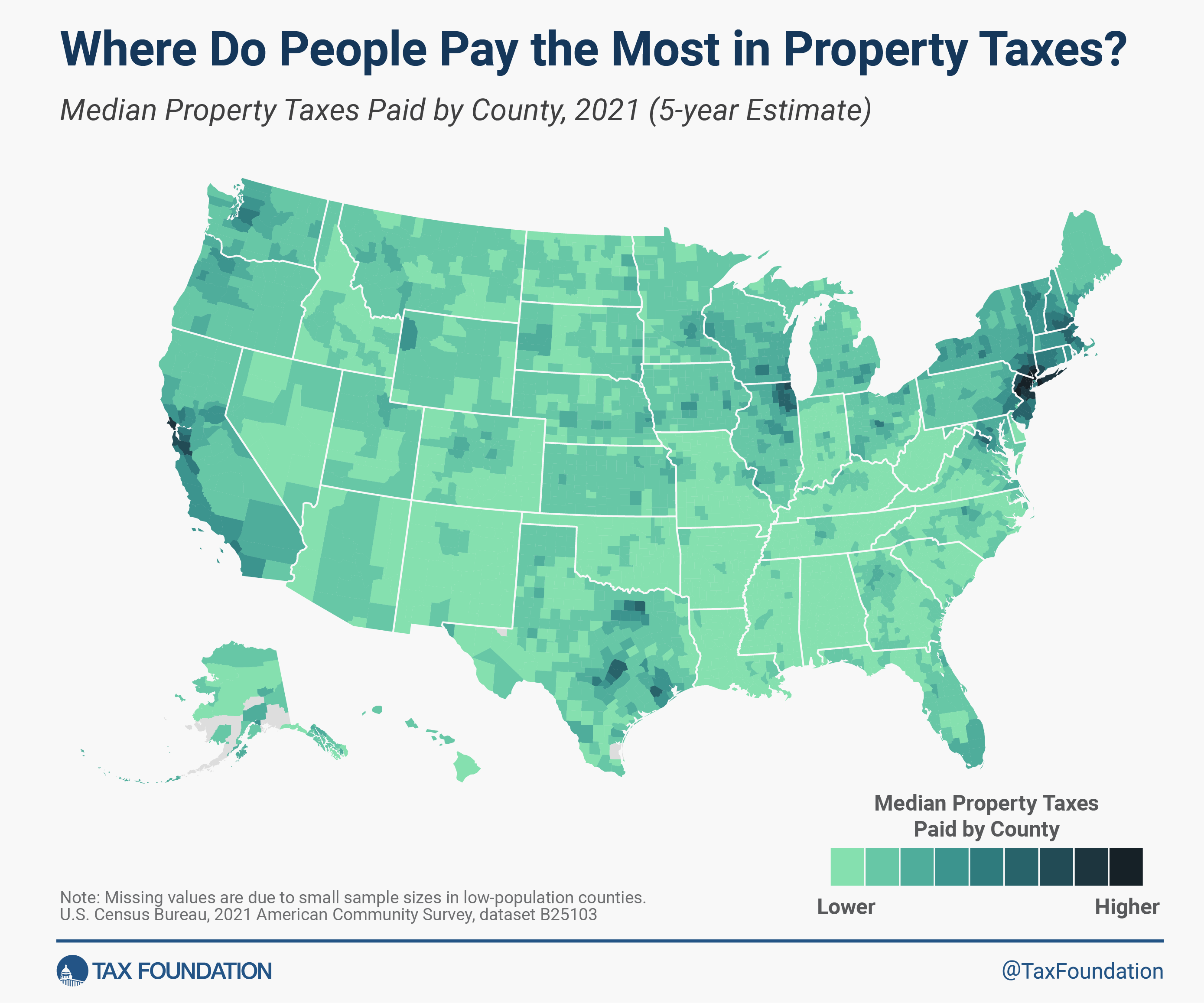
Where Do People Pay the Most in Property Taxes?

September 12, 2023By: Andrey Yushkov

Property taxes are the primary tool for financing local governments and generate a significant share of state and local revenues. In fiscal year 2020, property taxes comprised 32.2 percent of total state and local tax collections in the United States, more than any other source of tax revenue. Local governments rely heavily on property taxes to fund schools, roads, police departments, fire and emergency medical services, and other services associated with residency and property ownership. Property taxes accounted for 72.2 percent of local tax collections in fiscal year 2020.

Because property taxes are locally levied, providing a useful state-level comparison can be difficult. So, in an effort to present a multifaceted view, today’s blog features two maps focused on property taxes. The first looks at median property tax bills in each county in the United States, and the second compares effective property tax rates across states.

Median property taxes paid vary widely across (and within) the 50 states. The average level of property taxes paid in 2021 across the United States was $1,682. The lowest property tax bills in the country are in seven counties or county-equivalents with median property taxes of less than $200 a year:

  • Alaska: Northwest Arctic Borough and the Kusilvak Census Area*
  • Louisiana: Allen, Avoyelles, East Carroll, and West Carroll
  • Alabama: Choctaw

(*Significant parts of Alaska have no property taxes, though most of these areas have such small populations that they are excluded from federal surveys.)

The next-lowest median property taxes are found in Madison Parish, Louisiana ($215); Bienville Parish, Louisiana ($220); Sioux County, North Dakota ($223); Lamar County, Alabama ($234); and McDowell County, West Virginia ($237).

The 11 counties with the highest median property tax payments all have bills exceeding $10,000:

  • New Jersey: Bergen, Essex, Hunterdon, Morris, Passaic, and Union Counties
  • New York: Nassau, New York, Rockland, and Westchester Counties
  • Virginia: Falls Church

All but Falls Church are near New York City, as are the next highest, Suffolk County ($9,911) and Putnam County ($9,855), New York.

Where Do People Pay the Most in Property Taxes?

Median Property Taxes Paid by County, 2021 (5-year estimate)

Note: Missing values are due to small sample sizes in low-population counties. This interactive map is more accessible when viewed on larger screens.
Source: U.S. Census Bureau, 2021 American Community Survey, dataset B25103

LAUNCH FULL INTERACTIVE MAP     ACCESS SHAREABLE MAP

Where Do People Pay the Most in Property Taxes? 

Median Property Taxes Paid by County, 2021 (5-year estimate)

“They’re Not Going to Make Anymore !and”

Note: Missing values are due to small sample sizes in low-population counties. This interactive map is more accessible when viewed on larger screens.

Source: U.S. Census Bureau, 2021 American Community Survey, dataset B25103

Property tax payments also vary within states. In some states, typically those with low property tax burdens, this variation is not high. In Alabama, for instance, median property taxes range from below $200 in Choctaw County to $1,167 in Shelby County (part of the Birmingham–Hoover metropolitan area), with an average tax bill of $449. In Virginia, in contrast, median property taxes range from $378 in Buchanan County to more than $10,000 in Falls Church (part of the Washington metropolitan area), with an average tax bill of $1,764.

Another feature of property taxes is that higher median payments tend to be concentrated in urban areas. Median property taxes paid in New York County, San Francisco, Chicago (Cook County), and Miami (Miami-Dade County) are two to three times higher than their state’s average. This is partially explained by the prevalence of above-average home prices in urban centers. Because property taxes are assessed as a percentage of home values, it follows that higher property taxes are paid in places with higher housing prices. However, because millages—the amount of tax per thousand dollars of value—can be adjusted to generate the necessary revenue from a given property tax base, the higher payments also reflect an overall higher cost of government—and commensurately higher taxes—in these areas.

While no taxpayers in high-tax jurisdictions will be celebrating their yearly payments, it’s worth noting that property taxes are largely rooted in the benefit principle of taxation: the people paying the property tax bills are most often the ones benefiting from the services (think K-12 education or local parks). As argued by Joan Youngman in her book A Good Tax, the well-designed property tax, despite being the target of frequent political attacks, can be considered a good tax since it is usually visible, transparent, simple, and stable, satisfying most of the principles of sound tax policy.  

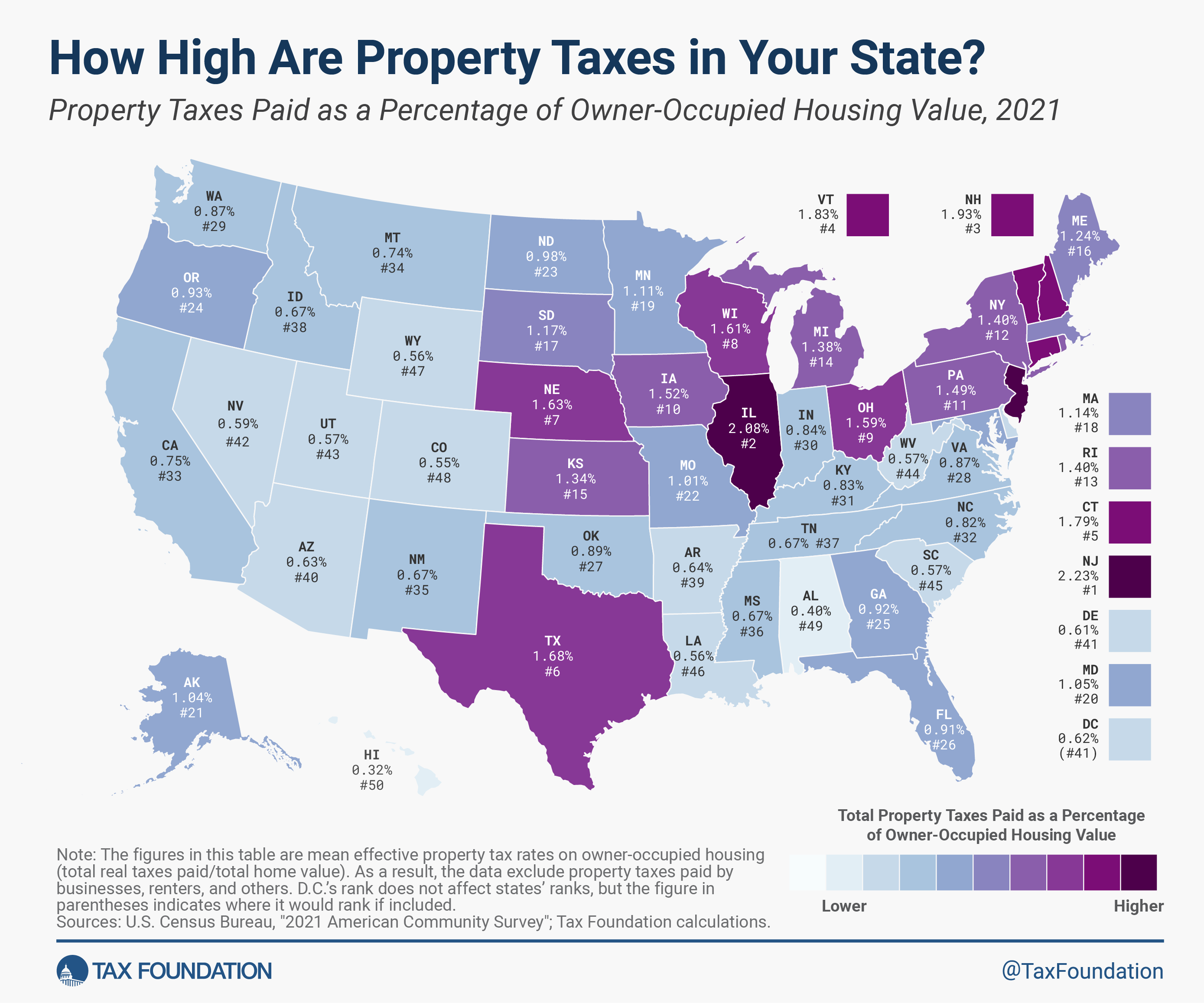
Because the dollar value of property tax bills often fluctuates with housing prices, it can be difficult to use this measure to make comparisons between states. Further complicating matters, rates don’t mean the same thing from state to state, or even county to county, because the millage is often imposed only on a percentage of actual property value, as discussed below. However, one way to compare is to look at effective tax rates on owner-occupied housing—the average amount of residential property taxes actually paid, expressed as a percentage of home value.

How high are property taxes by state 2023 property tax rates

U.S. Department of Housing and Urban Development – Marcia L. Fudge, Secretary
Office of Public Affairs, Washington, DC 20410      

HUD No. 23-187                                                                                            FOR RELEASE

HUD Public Affairs                                                                                        Thursday        

202-708-0685                                                                                                 August 31, 2023

HUD.gov/Press


HUD Awards Over $24 Million to 57 Grantees to Fight Housing Discrimination


WASHINGTON – Today, the U.S. Department of Housing and Urban Development (HUD) announced the allocation of $24,195,749.33 from its $56 million FY 2023 budget to support 57 fair housing organizations across the nation through the Fair Housing Initiatives Program(FHIP). These funds are being directed to second and third year multi-year grantees of the Private Enforcement Initiative (PEI) to continue their ongoing fair housing enforcement endeavors on a national scale. Furthermore, HUD has extended financial support to the Disability Law Center under the PEI initiative and JC Vision and Associates under the Fair Housing Organization Initiative/Continued Development Component (FHOI/CDC) program, utilizing unspent funds from the FY 2022 budget. A detailed breakdown of the awardees categorized by state can be found here.


“Unfortunately, far too many families face bias when it comes to renting and buying homes,” said HUD Secretary Marcia L. Fudge. “HUD is pleased to provide our state and local partners with resources like The Fair Housing Initiatives Program that give organizations the funding they need to combat housing discrimination and help build fair and inclusive communities.”


Award recipients gathered on August 30 and 31st in Denver, Colorado, at the Fair Housing Leadership Conference: Building an Equitable Future. HUD hosted the conference in honor of the 55th anniversary of the passage of the Federal Fair Housing Act, convening its Fair Housing Initiatives Program (FHIP) and Fair Housing Assistance Program (FHAP) partners for the first national FHEO in-person conference since 2018.


Each year, HUD makes funding available to support organizations that enforce the nation’s fair housing laws and policies, as well as educate the public, housing providers, and local governments about their rights and responsibilities under the Fair Housing Act.

Here @ e21 Realty we believe that everyone deserves A decent place to live.


The granted funds will empower the recipients to carry out fair housing enforcement through a range of activities. These include conducting thorough investigations, implementing testing methodologies to uncover instances of discrimination in both rental and sales markets, and taking the necessary steps to file fair housing complaints either with HUD or equivalent state and local agencies. Beyond enforcement efforts, the grantees will also engage in educational and outreach initiatives. Their aim is to educate the general public, housing providers, and local government bodies about the rights and obligations outlined in the Fair Housing Act and the fair housing services that grantees provide.


“The programs and services provided by the Fair Housing Initiatives Program are essential to HUD’s mission and fulfill a vital role in enforcing the Fair Housing Act,” said Demetria L. McCain, HUD’s Principal Deputy Assistant Secretary for Fair Housing and Equal Opportunity. “The funds provided today demonstrate HUD’s commitment to opposing discriminatory practices and ensure that our fair housing partners have the financial resources they need to continue educating the public.”

HUD is awarding grants in the following categories:


Private Enforcement Initiative (PEI) – This initiative funds non-profit fair housing organizations to conduct testing and enforcement activities to prevent or eliminate discriminatory housing practices.


Fair Housing Organizations Initiative (FHOI) – This program provides funding that builds the capacity and effectiveness of non-profit fair housing organizations by providing funds to handle fair housing enforcement and education initiatives more effectively. FHOI also strengthens the fair housing movement nationally by encouraging the creation and growth of organizations that focus on the rights and needs of underserved groups, particularly persons with disabilities.


A state-by-state breakdown of the awardees is available here.


###


HUD’s mission is to create strong, sustainable, inclusive communities and quality affordable homes for all.
More information about HUD and its programs is available at 
www.hud.gov and https://espanol.hud.gov.

You can also connect with HUD on social media and follow Secretary Fudge on Twitter andFacebook or sign up for news alerts on HUD’s Email List.

HUD COVID-19 Resources and Fact Sheets


We hope that you will want to continue receiving information from HUD.
We safeguard our lists and do not rent, sell, or permit the use of our lists by others, at any time, for any reason.

HUD COVID-19 Resources and Fact Sheets

Give us a call we can help!!!

Alabama Notary laws Are Changing

www.wbrc.com/2023/08/25/changes-al-notary-commission-process-take-effect-september-1/

Biden-⁠Harris Administration Announces Actions to Lower Housing Costs and Boost Supply

Launches first-of-its-kind program to address land use and zoning barriers that limit housing

President Biden’s economic vision is about building an economy from the middle out and bottom up, not the top down— that’s Bidenomics. A critical foundation of that vision, and the central goal of the Biden-Harris Administration’s Housing Supply Action Plan, is an economy where everyone has access to a safe and affordable home. That vision means lowering costs, including by building and preserving more housing, particularly for lower- and middle-income households. Today’s announcements will lower housing costs by tackling challenges that have stifled affordable housing for decades, as well as seizing immediate opportunities:

  • Reducing barriers to build housing like restrictive and costly land use and zoning rules;
  • Expanding financing for affordable, energy efficient and resilient housing; and
  • Promoting commercial-to-residential conversion opportunities, particularly for affordable and zero emissions housing.
“Let Me Help You Find Your Home”

Recent data show that inflation in rental markets is decelerating and more apartments are on track to be built this year than any year on record. The Administration’s actions are directly leading to the creation of tens of thousands of affordable housing units. For example, jurisdictions participating in the American Rescue Plan’s (ARP) HOME program will produce at least 20,000 units of affordable housing and support an additional 23,000 households with rental assistance, non-congregate shelter, or supportive services. Treasury recently announced that communities across the country will use ARP State and Local Fiscal Recovery Fund funds for 2,500 separate projects and developments to meet housing needs and combat homelessness. And since the Administration’s restart of the Federal Financing Bank’s Risk Sharing program, almost 12,000 rental homes have been created or preserved.

Today’s actions further build on the Biden-Harris Administration’s Housing Supply Action Plan and updates announced last fall, and are a down payment on the historic housing investments proposed in the President’s Budget that would boost supply, lower costs and cut dangerous climate pollution, promote homeownership, protect renters, and promote fair housing. They also complement the actions by the Biden-Harris Administration in just the last week, including a crackdown on junk fees in the rental housing market, and new steps announced today that build on its Blueprint for a Renters Bill of Rights.

Reducing Barriers to Build Housing Like Restrictive and Costly Land Use and Zoning Rules

Local land use laws and zoning regulations limit where, and how densely, housing can be built. This constrains housing supply, perpetuates historical patterns of segregation, prevents workers from accessing jobs, and increases energy costs and climate risk. Today, the Biden-Harris Administration is announcing new actions to fund jurisdictions committed to removing barriers that restrict housing production and preservation, including by:

Announcing the Department of Housing and Urban Development’s (HUD) Pathways to Removing Obstacles to Housing (PRO Housing) program. Restrictive local land use rules slow down housing production, or prohibit housing being developed at all, which increases the costs to rent or purchase a home. Such restrictive rules are often also inconsistent with fair housing principles. This first-of-its-kind $85 million federal program will provide communities with funding to identify and remove barriers to affordable housing production and preservation. HUD will award grants of up to $10 million to jurisdictions that have an acute demand for affordable housing and are working to identify, address, or remove barriers to housing production and preservation. Funding can be used for planning and policy activities to allow for higher-density zoning and rezoning for multifamily and mixed-use housing, streamlining affordable housing development, and reducing requirements related to parking and other land use restrictions. Funding can also be used for infrastructure activities necessary for the development or preservation of housing.

Reducing land-use restrictions and improving transportation access to housing. Earlier this month, the Department of Transportation announced its Reconnecting Communities and Neighborhoods (RCN) program, which will provide up to $3.16 billion for planning and capital construction projects that prioritize disadvantaged communities and improve access to daily destinations. This includes improving connections to affordable housing, fostering equitable development, and increasing housing supply through zoning reform. RCN includes a $450 million Regional Partnership Challenge that will incentivize stronger regional partnerships to tackle persistent equitable access and mobility challenges, with land use reform as a key priority.

Encouraging the improvement of land use in Economic Development Administration grant programs. The Economic Development Administration (EDA) updated its “Investment Priorities” that guide the agency’s grantmaking to include an emphasis on efficient land use, where commercial uses, economic activity, and employment opportunities are concentrated and accessible to nearby residential density. Moving forward, EDA will more explicitly incentivize projects that include an emphasis on density in the vicinity of the project – which can in turn encourage greater housing supply and allow people to live closer to work and services they need.

Expanding Financing to Create and Repair Affordable, Energy Efficient and Climate Resilient Housing

Gaps in access to financing, along with the complexity of mixing funding sources, limit the production or preservation of affordable housing. The Biden-Harris Administration is taking the following actions to expand financing for affordable, energy efficient, and climate resilient housing going forward:

Providing new financing for affordable, energy efficient, climate resilient housing and clean energy investments. This month, the Environmental Protection Agency (EPA) announced its $27 billion Greenhouse Gas Reduction Fund (GGRF), which will mobilize private capital and provide financing for thousands of clean energy projects, including cost-saving retrofits of existing homes and buildings, construction of zero emissions buildings, and commercial to residential conversions, among others. Such investments will reduce pollution and lower utility costs. This announcement follows HUD’s announcement of its Green and Resilient Retrofit Program with over $830 million available in grants and loan subsidy, for loan commitments up to $4 billion, to modernize existing HUD-assisted affordable homes so they remain available for families into the future. The Department of Energy also released $90 million to advances efficiency and resilience through building codes, and HUD, FHA, and the United States Department of Agriculture proposed modernizing energy codes.

Making it easier to build and rehabilitate apartments with FHA-insured mortgages. HUD announced new guidelines that increase the dollar amount threshold at which a multifamily loan is considered a large loan and is subject to additional underwriting requirements from $75 million to $120 million. This change will simplify underwriting and reduce development costs for large multifamily properties financed with FHA-insured mortgages without presenting undue risk to FHA, significantly expanding commitments for affordable housing financing. HUD will review this large loan limit annually.

Streamlining financing for the creation of affordable housing. HUD announced that it will allow larger loans to participate in the agency’s Low Income Housing Tax Credit (LIHTC) Pilot Program, which increases the number of apartment sites eligible for a program that streamlines financing. HUD also updated guidelines to allow public housing authorities (PHAs) to more easily use housing vouchers and mixed-finance transactions to create or preserve housing.

Repairing and expanding affordable housing. HUD published new guidance for public housing authorities and multifamily housing owners participating in the Rental Assistance Demonstration, providing them with additional tools to repair and build deeply affordable housing. The guidance also promotes water- and energy-efficiency investments, and includes new requirements that address climate resilience, adopts stronger energy efficiency standards, and supports repairs to thousands of existing affordable units in the next three years.

Empowering homeowners to be part of the solution by increasing financing for onsite housing units. In April, FHA proposed updates that, if implemented, would make it easier to finance accessory dwelling units (ADUs), which are additional onsite housing units. Among the changes is the ability to include projected rental income from an ADU as part of the qualifying income when purchasing or refinancing a home. This added flexibility would expand opportunities for low- and moderate-income homeowners to benefit from the wealth-building potential of ADUs while increasing the stock of affordable housing.

Promoting Commercial-to-Residential Conversions

Across the country, commercial vacancies are affecting urban and regional economies. Commercial-to-residential conversion can counteract those effects, reenergize local economies, and add to the supply of housing. The adaptive reuse of these properties also presents an opportunity to create zero-emissions housing, which will reduce energy costs for residents and cut dangerous climate pollution. Recognizing that opportunity, the Biden-Harris Administration is launching a new commercial-to-residential conversion initiative that is:

Leveraging federal funding and other tools to support conversions. The White House will lead a new interagency working group to develop and advance federal funding opportunities that support the conversion of commercial properties to housing, and leverage climate-focused federal resources to create zero emissions and affordable units. For example, programs like HUD’s PRO Housing announced today, as well as investments from President Biden’s Inflation Reduction Act and Bipartisan Infrastructure Law, can be used for such conversions. As part of this initiative, the General Services Administration (GSA) will launch an effort to identify and market surplus federal properties that represent the best opportunities for commercial-to-residential conversions. Ongoing conversion projects from GSA dispositions are already producing over 1,000 new housing units. The initiative will continue to convene developers, municipalities, and other stakeholders to learn about opportunities and challenges.

Funding research that supports commercial to residential conversions. This week, HUD announced new funding to support research on office-to-residential conversions, including producing a new guide for state and local policymakers on how to make these projects more economically viable. Building on a public convening held this week on office-to-residential conversions, HUD will release a policy brief on this topic later this year.

Go back

Your message has been sent

Warning
Warning
Warning
Warning

Biden-⁠Harris Administration Announces Actions to Lower Housing Costs and Boost Supply

How To Keep Carpenter Bees Away From Your Home

Story by Arricca Elin SanSone • Jun 17

Created by Southern Living

Here’s how to discourage carpenter bees from making their homes in yours.

Fact checked by Khara Scheppmann

Gardeners know pollinators are essential, especially those industrious bees buzzing tirelessly in and out of squash blossoms and trumpet vines. But one kind of bee may wear your patience thin if you’ve discovered their handiwork: Carpenter bees! If you’ve found perfectly round half-diameter holes drilled into your deck timbers, wood siding, mailbox posts, or outdoor furniture with a little sawdust beneath the holes, you may be housing these gentle bees.

Carpenter bees (Xylocopa virginica) actually are fascinating native pollinators. They’re about three-fourths to one-inch long with shiny abdomens, not fuzzy back ends like bumble bees. They may look intimidating, but they’re docile bees who are more interested in going about their own bee business than in bothering you. “Carpenter bees are solitary. She’s a single mom who builds a nest and forages for her young,” says Keith Delaplane, PhD, professor of entomology at the University of Georgia. “She’s just trying to make a new generation.”

Getty Images / 2ndLookGraphics© Provided by Southern Living

Meet The Expert

Keith Delaplane, PhD, is professor of entomology at the University of Georgia.

Ahead, here’s what else you should know about carpenter bees, as well as how to discourage them from nesting in and around your house if you don’t want to deal with their holes:

Created by Southern Living

addisoniacolored08newy_0050 (2)” by BioDivLibrary/ pdm 1.0

The bees emerge in the spring. “The females are discreet, sneaking in and out of their holes. But the males are territorial. You’ll see them hovering around, battling and chasing each other,” says Delaplane. They’ll divebomb you, too, if you get close.

But carpenter bees are no threat to people or pets. Males have no stingers; they’re just interested in fighting each other and finding a female. And while females do have stingers, you’d have to grab and squeeze her hard. “In my more than 30 years in entomology, I’ve never heard of a single sting from a carpenter bee,” says Delaplane. 

Carpenter bees actually are important pollinators. In fact, it’s been discovered that they contribute to blueberry pollination by stimulating the presence of honeybees. “Carpenter bees steal nectar from the side of blueberry flowers instead of pollinating the flowers. Honey bees are attracted to the holes, arriving in huge numbers to pollinate the berries,” says Delaplane. It’s an amazing example of how insects work “together” to get a job done.

Why Do Carpenter Bees Drill Holes in My House?

The simple answer is they need a place to call home. After the female mates, she excavates a hole into a wood surface with her strong mandibles. She drills in about a half-inch, then makes a turn and tunnels with the grain. Each tunnel may take up to a month’s worth of work. She creates a series of cells where she’ll deposit food and lay her eggs. The next generation emerges in late summer and overwinters in the old tunnels.

The good news is that carpenter bees don’t present a huge risk to your home. “They don’t do structural damage, like termites can,” says Delaplane. “Most of the damage is cosmetic, and occasionally, if a tunnel has been used by multiple generations, it will breach the surface of the wood.” Rarely, a secondary problem may occur if woodpeckers discover the bounty and drill into the wood in search of bee larvae.

How Do I Stop Carpenter Bees from Drilling?

Let’s say you’ve had enough of their antics. It’s not easy to stop them because this is what they do! For most people, an occasional hole isn’t a big problem. However, if your patience has been exhausted, you can try a few options:

·  Add a protective coat to wood surfaces. Carpenter bees are diverted from painted, sealed and pressure-treated wood surfaces. It’s not foolproof, but it may reduce the numbers, says Delaplane.

·  Use vinyl, aluminum, or cement board siding and composite products when possible because they can’t penetrate these materials.

·  Protect the rough ends of timbers with wire screening or metal flashing.

Unfortunately, applying insecticides or essential oils to surfaces isn’t useful. There’s little evidence these products work, and the substances don’t penetrate the wood. Products also would have to be reapplied frequently, and treating every potential surface in your yard would be impossible. As for traps, they’re worthless. “You might get some visceral satisfaction from trapping one, but it’s not going to solve your problem,” says Delaplane.

Should I Seal Carpenter Bee Holes?

This is one effective way to discourage repeat nesting. For tunnels within easy reach, treat entrance holes. Spray the tunnel opening with a product labeled for carpenter bees. Leave the holes open for a few days, then plug them with caulking, wood putty, or a wooden dowel and wood glue. If you don’t treat the hole, the bees can chew their way out. Sealing the holes also helps prevent moisture intrusion and wood decay.

But if you have a large-scale problem, such as multiple carpenter bees drilling into your home’s wood siding, woodpeckers in search of an easy meal, or holes located high above ground level requiring the use of a ladder, consult a professional pest control company. The company should treat individual holes to ensure there are no return visitors, says Delaplane.

What is the 1% Rule In Real Estate

Calculating the 1% rule is simple. Just multiply the purchase price of the property by 1%. Even easier, move the comma in the purchase price to the left two spaces. The result should be the minimum you charge in monthly rent.

If the property requires any repairs, you’ll also want to factor them into the equation by adding them to the purchase price, then multiplying the total by 1%.

Examples Of The 1% Rule For Investing

Here’s an example for a home with the purchase price of $150,000:

$150,000 x 0.01 = $1,500

Using the 1% rule, you should find a mortgage that has a monthly payment of $1,500 or less and charge your tenants a minimum monthly rent of $1,500.

Let’s say the home required about $10,000 worth of repairs. In this situation, you would add the cost of repairs to the purchase price of the home, for a total of $160,000. Then, you’d multiply that total by 1% to get a minimum monthly payment of $1,600.

An Investment Property That Passes The 1% Rule

Maybe you’re looking to purchase an investment property that’s listed for $200,000 and has historically charged $2,500 for monthly rent. Per the 1% rule, the monthly rent should be equal to or greater than $2,000 per month. Since this property charges $2,500 per month, it passes the 1% rule.

An Investment Property That Does Not Pass The 1% Rule

Let’s say the same property, listed for $200,000, has historically charged $1,800 for monthly rent. This property wouldn’t pass the 1% rule because the monthly rent is less than $2,000 (or 1% of the purchase price).

In this case, you would continue your search for a more profitable rental property or make an offer of no more than $180,000 to purchase the home.

The 1% Rule And Other Investment Rules In Real Estate

When it comes to real estate investing, the 1% rule isn’t the only method used for determining the best opportunities to buy a rental house. Other popular methods include the gross rent multiplier, the 70% rule and the 2% rule.

Gross Rent Multiplier

The gross rent multiplier (GRM) gauges the amount of time to pay off the investment. It’s the purchase price divided by the gross annual rent. The total you get is the number of years it will take to pay off the investment using just your rental income. The lower the GRM, the more lucrative the property may be.

For example, you purchase an investment property for $200,000. You charge $2,500 per month for rent. Your annual gross rental income is $30,000 (2,500 x 12). $200,000/$30,000 = 6.67.

The GRM of this property is 6.67, meaning it will take about 6.67 years to pay off the property using your gross rental income. Of course, you’ll need to consider other expenses when determining a property’s profit potential. These include repair costs, operating costs, maintenance and vacancy rate.

You can use the GRM to compare different investment properties, too. If one property has a GRM of 6.67, while another has a GRM of 8.33, the one with the lower GRM (6.67) may be the better option since you’ll pay off the investment faster. When comparing properties, make sure they are in similar markets and have similar operating, maintenance and other costs.

70% Rule

The 70% rule is for those looking to flip a house, and it states that the investor should pay no more than 70% of the home’s after repair value (ARV), minus any repair costs.

To calculate the 70% rule, simply take the estimated ARV of the home and multiply it by 0.7 (or, 70%). Once you have the total, subtract any estimated repair costs. This will be the amount you should pay for the property.

Here’s an example: You are interested in a property that you estimate will have an ARV of $150,000. You estimate that you’ll need to spend about $30,000 on repairs in order to flip the home. $150,000 X 0.7 = $105,000 so $105,000 is the maximum amount you should spend on purchasing the home and making the repairs. $105,000 – $30,000 (repair cost) = $75,000.

Per the 70% rule, you should pay no more than $75,000 for the property.

2% Rule

The 2% rule is the same as the 1% rule – it just uses a different number. The 2% rule states that the monthly rent for an investment property should be equal to or no less than 2% of the purchase price.

Here’s an example of the 2% rule for a home with the purchase price of $150,000: $150,000 x 0.02 = $3,000. Using the 2% rule, you should find a mortgage that has a monthly payment of $3,000 or less and charge your tenants a minimum monthly rent of $3,000.

As you can see, the 2% rule is more extreme than the 1% (basically doubling the monthly rent), but it can work in certain markets and provide a financial safety net if you have difficulty filling vacancies or need a major, costly repair on the property.

No matter which rule you decide to go with, it’s important to run the numbers on a potential property to make sure you’re making an affordable investment.

Get approved to see what you can afford.

Rocket Mortgage® lets you do it all online.

Start My Approval
When The 1% Rule Works

The 1% rule is a good prescreening tool. It works well as a guide for determining a good investment from a bad one and narrowing down your choices of properties. As you review listings, apply the 1% rule to the listing price and then see if what you get is close to the median rent for the area. If the median rent for the area is way below 1% of the listing, you may want to remove that property from your list of options.

When The 1% Rule Doesn’t Work

As already mentioned, the 1% rule has limitations. It’s best to only use the calculation as a rule of thumb, because it doesn’t consider costs like maintenance, property taxes, insurance and operating expenses.

You’ll also want to be aware of the problems that may arise with purchasing an investment property in the most expensive cities, where it may be more expensive to buy a home but the average rent for the area is lower than 1% of the purchase price. For example, the median list price in San Francisco is about $1,290,629. Using the 1% rule, you should charge a minimum monthly rent of $12,906. However, the median rent in San Francisco is close to $3,000 per month. To match the 1% rule to the median rent in San Francisco, you’d have to find a property listed for about $300,000 – almost a quarter of the median list price for the city.

Factors To Consider Beyond The 1% Real Estate Rule

When trying to calculate the profitability of an investment property, especially a property located in one of the best places to invest in real estate, other factors are also worth considering. One is the net operating income, which is the profit you make on the property after subtracting the operating expenses. This formula takes into account those factors listed above that the 1% rule does not. You’ll also want to think about the internal rate of return (IRR), which compares the future value of the property to what it’s worth today.

The Bottom Line: Know The Rules Of Investment Properties

When considering an investment property, it’s important to not be in the dark on how large of a return on investment the home can provide. In other words, it’s essential to know what you’re getting into before purchasing a property. Now that you have a few strategies for making that decision, it may be time to start your real estate investment journey.

Get approved with Rocket Mortgage® today to find the best financing solution for your real estate investment goals.

Get approved to see what you can afford.

Rocket Mortgage® lets you do it all online.

Start My Approval