HUD SECRETARY BEN CARSON HOSTS AFFORDABLE HOUSING ROUNDTABLE AND VISITS HABITAT FOR HUMANITY IN NORTH CAROLINA
CONCORD, N.C. — U.S. Housing and Urban Development Secretary Ben Carson hosted a roundtable in an Opportunity Zone alongside U.S. Representative Richard Hudson (R-NC 8) with several leaders in the North Carolina housing market to discuss innovative solutions to increasing the Nation’s supply of affordable housing.
Secretary Carson then visited a Habitat for Humanity Cabarrus County construction site alongside U.S. Representative Hudson as an example of community collaboration with the goal of increasing the affordable housing stock. Founded by churches over thirty years ago, Habitat for Humanity Cabarrus County has served nearly 1,400 individuals, 582 children and 559 families.
Michaelgouldgroup.com
Secretary Ben Carson hosts an affordable housing roundtable discussion and visits a Habitat for Humanity Cabarrus County construction site. View additional pictures via Secretary Carson’s Twitter page here.
“Housing prices have risen to the level that there are many in the workforce who maintain a job, but still cannot afford a place to call home,” said Secretary Carson. “The Trump administration has been working hard to bring solutions to this problem. Last week, I was pleased to bring together leaders of innovation and deregulation in North Carolina’s housing market, and I thank Representative Hudson for his commitment to affordable housing for all.”
“I’m focused on finding solutions to provide affordable housing, economic investment, and more jobs for our community,” said Rep. Hudson. “Through measures like Opportunity Zones and the Affordable Housing Credit Improvement Act, I’m proud of the progress made by working with President Trump which we highlighted last week in Kannapolis. I appreciate Secretary Carson for coming to our community and look forward to working together to continue to improve our economy and expand opportunities for all Americans.”
Background:
On June 25, 2019, President Donald Trump signed an Executive Order establishing the White House Council on Eliminating Barriers to Affordable Housing, and named Housing and Urban Development (HUD) Secretary Ben Carson as its chairperson. The Council consists of members across eight Federal agencies and engage with State, local, and tribal leaders across the country to identify and remove the obstacles that impede the production of affordable homes – namely, the enormous price tag that follow burdensome government regulations.
Research indicates that more than 25% of the cost of a new home is the direct result of Federal, State, and local regulations. For this reason, in recent years, the construction of new multifamily and single-family dwellings has not kept pace with the formation of new households. Census Bureau data indicates that from 2010 to 2016, only seven homes were built for every 10 households formed. As a result, Americans have fewer housing opportunities, including the opportunity to achieve sustainable homeownership, which is the number one builder of wealth for most American families.
###
HUD’s mission is to create strong, sustainable, inclusive communities and quality affordable homes for all. More information about HUD and its programs is available at www.hud.gov and https://espanol.hud.gov.
Alabama’s new process for obtaining a marriage certificate is designed to make tying the knot easier but it will require couples to go through several steps.
“The new law eliminates the need for a license to be obtained in advance and a ceremony is no longer required, although couple may certainly have a ceremony if they wish,” Madison County Probate Judge Frank Barger said.
Here is the new process:
1. Obtain a standardized marriage certificate form provided by the state or county probate judge’s office. The process will differ by county but in Madison County, a fillable form will be available on the Probate Judge’s website on Aug. 28.
2. Complete the form. The form requests the same basic information about each spouse that is currently used. Madison County is requiring the form be typed to prevent problems with reading the certificate.
3. Take the completed form to a notary for signature.
4. Deliver the notarized form to the county Probate Judge’s office for recording, along with the filing fee from that county. The form must be submitted with 30 days of being signed.
5. Pay the required filing fee. The fee varies by county.
6. The effective date of the marriage is the latter of the dates of the signature of the spouses.
All other requirements related to getting married -applicants must be of legal age, not already married, not related and competent to enter into marriage – remain the same. The marriage does not have to be solemnized by a minister or someone else licensed to perform a ceremony and that person does not have to sign the form.
Current marriage licenses are valid through Aug. 28, after that date couples must use the new forms.
Brenda Richardson – Money.com – Monday, August 24, 2020
More than a half century after its passage, a landmark law promoting residential integration is being undermined by political attacks.
Intended as a follow-up to the Civil Rights Act of 1964, the Fair Housing Act was signed by President Lyndon Johnson on April 11, 1968, days after the assassination of Martin Luther King. The legislation has two main purposes: to prevent housing discrimination and to promote diverse communities. Last month, the Trump Administration set off alarm bells when it repealed the 2015 Affirmatively Furthering Fair Housing regulation. The Obama-era rule sought to reinforce the 1968 law by requiring cities to more rigorously examine local housing patterns for racial segregation and come up with plans to address any measurable bias.
New Homes…
After the Department of Housing and Urban Development terminated the rule in late July, President Trump tweeted:
I am happy to inform all of the people living their Suburban Lifestyle Dream that you will no longer be bothered or financially hurt by having low income housing built in your neighborhood… — Donald J. Trump (@realDonaldTrump) July 29, 2020 The administration claimed local governments have been overburdened by AFFH requirements. Fair housing advocates have condemned the action. “The government helped create entrenched, pernicious residential segregation and has an obligation to undo it,” said Nikitra Bailey, executive vice president at the Center for Responsible Lending. “By rejecting the Fair Housing Act’s mission to dismantle segregation and the inequity it created, this administration is eschewing its responsibility and will be on the wrong side of history.”
Discriminatory housing practices have reinforced systemic racism in America since the Jim Crow era. Before 1968, landlords and real estate agents could legally deny someone a rental unit or home because of race. A bank could deny a mortgage based on the homebuyer’s skin color or a neighborhood’s racial mix. Zoning and land-use restrictions could be designed to keep people of color out. Illegal housing discrimination still occurs. There were 31,202 reported complaints of housing discrimination in 2018, up 8% from 2017. The National Fair Housing Alliance estimates 4 million instances of housing discrimination occur every year, since most go unreported. In the second quarter of 2020, 47% of Black households owned their homes, compared with 76% of white households, according to the Census Bureau.
“If you look at certain elements when it comes to housing access, we are actually a hundred years behind,” said Lisa Rice, president and CEO of the National Fair Housing Alliance. “We could be living back in the 1890s.” Subtle forms of discrimination
The Supreme Court declared racial restrictive covenants—clauses preventing sales to people who were not white—unconstitutional in 1948. But even in the 1950s many homeowner associations had agreements with brokers to not show minority candidates homes in the neighborhood. This practice was blatant and public, said John Logan, a Brown University sociologist who studies housing discrimination. “There were public arguments made that this is better for everybody,” he said.
Today, rather than overt door-slamming discrimination, bias persists in more subtle ways. Housing providers may give incorrect information about what’s available or steer home seekers to particular areas based on their race. Landlords might apply different standards to applicants of color or put different terms in a lease. The practice of racial steering hit home for Logan about 15 years ago when he got a job at Brown and started housing hunting in Providence, Rhode Island. As his real estate agent drove through one area, he recalled that she said, “There are some nice houses in this neighborhood, but I’m not going to show you because you wouldn’t want to live here
“I had no idea of what she was saying because I didn’t know anything about the neighborhoods,” explained Logan. “Later, I realized that this was a part of the area not far from the university that had a sprinkling of African Americans living there. And that’s what she meant. She knew I wouldn’t be interested because, why, because I’m white. That’s the way it works. Presumptions are made, preferences are communicated, sometimes miscommunicated, but it’s part of the whole story.” One family’s experience
Trump’s tweet about the endangerment of the suburban lifestyle upset many Americans, including Michael Waters, a retired military officer who lives in Elmore, Alabama. “His tweet just struck a nerve with me because of him trying to use race and the fair housing issue with all this stuff about destruction of the suburbs to divide this country,” said Waters, explaining that it brought back bleak memories of the 1960s.
“My father was living that American dream of many of the World War II American vets,” said Waters. “That, hey, you served your country, you served well, your country made it possible for you to buy that house with the white picket fence in the suburbs and get a decent job and so forth.” Waters’ father, who worked at the Brooklyn Naval Shipyard, had worked hard to buy a home for his family on Long Island, New York. When he was transferred to Philadelphia Naval Shipyard in 1965, he was determined to do the same, but the family ran into roadblocks.
“Suddenly, in some ways, that American dream became a nightmare because we did not have at that point the Fair Housing Act,” said Waters. His parents went so far as having a white attorney negotiate the purchase of a house, only to have the real estate agent refuse to complete the deal when the couple arrived for their closing.
“I can remember long house-hunting trips that ended up with my mother in tears on the drive home,” said Waters. His father decided to keep the family in their Long Island home and commute daily to Philadelphia. For 10 years, he got up every morning at 3 a.m. and returned home around 7:30 p.m. until he was finally able to transfer to a job in Brooklyn.
“This is the price racism and discrimination in housing cost both my father and our family,” said Waters. The legacy under investment
Forced segregation has also led to under investment in Black neighborhoods, causing harm not just to individual families but also at the community level. “The more black and brown the community got, the more disinvestment we saw,” explained Rice. “It also created scenarios where municipalities, cities and jurisdictions could direct resources. In other words, who’s getting the new sewer line, who’s getting the upgraded water line, who’s getting the deleaded piping, who’s getting the new infrastructure project. Those kinds of things contribute to the infrastructure that is available, which drives access to opportunity for communities.”
Race is the most significant predictor of whether a person will live in a neighborhood with contaminated air, land or water. More than half of the people who live within two miles of a waste facility are people of color. People of color are twice as likely to live in areas without potable water or proper sanitation. Research shows food deserts, areas where people have limited access to healthy and affordable food, are more common in minority neighborhoods. Only 8% of Blacks live in a census tract with a grocery store.
“Because of residential segregation, your Zip code is a better predictor of your health than your genetic code,” said Rice. Blacks and Latinos are also more likely to live in health deserts with fewer healthcare facilities and primary care physicians. In Houston, white communities have 5.5 times as many healthcare facilities than Black communities have. In Oakland, California, white communities have almost 11 times the healthcare facilities that Latino communities have.
A resident of a community of color has a shorter life expectancy than someone who lives in a predominantly white community. “People of color are more likely to have asthma, heart disease, respiratory illnesses and other types of diseases that are connected to the environment or spaces in which they live,” said Rice. “And, of course, those are all contributing factors to whether or not you will contract the COVID virus and potentially die from it.” “The Affirmatively Furthering Fair Housing provision of the Fair Housing Act helps address these structural issues,” said Rice. “Unfortunately, the current administration weakened our ability to enforce the Fair Housing Act.” Rolling back fair housing rules
The Fair Housing Act mandated that in order to receive certain federal funds, state and local governments must administer programs and activities in a way that expands access to opportunity for all.
“For many years under many administrations—progressive, more progressive, more conservative—there hasn’t actually been much at the federal level in terms of fair housing,” said Logan. “Local authorities and HUD have been pushed—kicking and screaming—into taking some actions, in some cases where a lawsuit was successful. That’s pretty much been the story.” He explained that, even if fair housing wasn’t always a policy priority, it was accepted as a goal. What’s different now is that the Trump administration is actively undermining the idea of fair housing.
“They are now legitimating a point of view that fair housing actually is bad policy—it’s not good for localities, it’s not even good for minorities to enforce fair housing,” said Logan. “They are legitimating exactly the opposite point of view of what is in the original legislation and in many court decisions related to that legislation.” More from Money:
Becoming a Homeowner Isn’t Easy. Here’s How Three Black Families Did It Black-Owned Businesses Saw Growth During the Protests. Here’s Why the Support Matters Long-Term
How Low Are Mortgage Rates Right Now? Just Look at the Sky-High Numbers From the ’80s and ’90s
This is a joint blog by the Department of Defense (DoD), the FTC and the Consumer Financial Protection Bureau (CFPB).JUL 31, 2020
As we approach the end of Military Consumer Protection Month, it’s time to think about how we can support servicemembers all year long. Seven years ago, the Federal Trade Commission (FTC) launched Military Consumer Protection Day to highlight fraud affecting servicemembers. Since then, the observance has grown into a national, year-round campaign. Militaryconsumer.gov provides servicemembers and their families with resources from partner agencies like Department of Defense (DoD), the FTC and the Consumer Financial Protection Bureau (CFPB) to boost their financial readiness.
The unique demands of military service can amplify financial challenges, leaving servicemembers to fend off fraudsters looking to do them financial harm or deal with the costly consequences of a bad financial decision. The Military Consumer website brings government agencies, consumer advocates, and military support groups together to spotlight free tools, information and resources that help servicemembers and families, and veterans tackle those challenges.
Winding Road…
Here are just a few you can use year-round:
Federal Trade Commission and Military Consumer:Military Consumer is a one-stop shop with short tips that link to more in-depth resources from the FTC and its many partners about consumer issues specific to the military. The FTC also has information to help identity theft victims , older consumers, Spanish speakers , as well as people who need just the consumer protection basics . Check out FTC.gov/Coronavirus to learn about steering clear of pandemic-related scams and how to deal with the financial fallout.
Department of Defense: The DoD offers servicemembers and military families several resources that can help them get and stay financially fit. From understanding benefits and entitlements like the Blended Retirement System to updates on servicemember coronavirus resources to information on military consumer protection laws like the Military Lending Act, the DoD’s Office of Financial Readiness (FINRED) offers financial education resources created for servicemembers at every level of financial experience. Military spouses can find a robust suite of tools and resources on MilSpouse Money Mission , a website designed to provide military spouses with trusted information they can use to actively be involved in making financial decisions for their families’ financial well-being and achieving of financial goals.
Consumer Financial Protection Bureau: The CFPB works to protect consumers from financial harm and empowers them with the tools they need to become smarter and savvier consumers. Consumers can visit the CFPB’s website to get up-to-date information and resources on protecting and managing their finances during the global pandemic; consumer tools to help make decisions on mortgages, auto loans, credits cards, and other products; and browse answers to hundreds of financial questions. Servicemembers can also find military-specific resources to help them at different steps in their military lifecycle and award-winning online educational resource s that can help improve money management skills. Consumers, including servicemembers, who have a problem with a financial product or service they can’t solve on their own can also submit a complaint.
While Military Consumer Protection Month is a great time to share consumer protection resources from the campaign’s many partners , our efforts don’t stop on July 31. Help us spread the word now and throughout the year.
Erik J. Martin – Bankrate – Thursday, August 20, 2020
Are You Ready?
Buying or selling a home can be a complicated process. Sometimes, homebuyers have trouble qualifying for a mortgage. Other times, sellers yearn to cut through the red tape and net potentially more profit. The solution for both may be owner financing. Although not very common today, owner financing is when the seller offers direct financing to the buyer instead of or in addition to a mortgage. What is owner financing? Owner financing occurs when the owner of a property for sale provides partial or complete financing to the buyer directly, after the buyer makes a down payment, according to Michael Foguth, founder and president of Foguth Financial Group in Howell, Michigan. “The agreement here is very similar to a mortgage loan, except the owner of the home owns the debt instead of a bank or other lender,” Foguth says. Owner financing is usually not reported on the buyer’s credit report. There is typically a substantial down payment required (usually 10 percent to 15 percent) that makes up for the fact that the financing is usually not dependent on the buyer’s income or credit history – although sellers are advised to perform a credit check regardless. Chris McDermott, real estate investor and broker with Jax Nurses Buy Houses in Jacksonville, Florida, has offered owner financing himself on investment properties he’s sold. McDermott says it can be a common practice in some areas, “specifically for rural land or homes that a seller owns free and clear.” Owner financing can be beneficial to buyers who aren’t eligible for a desired loan from a lender, or if the lender only qualifies the buyer for a portion of the purchase price. In the latter scenario, the buyer may be able to take out a first mortgage from the lender for that portion, and then obtain owner financing for the shortfall. How does owner financing work? In most owner financing arrangements, the owner (seller) records a mortgage against the property, which is sold via deed transfer to the buyer. “Typically, the owner lets the buyer take over and move into the house without a mortgage, but after the buyer makes a down payment,” explains Andrew Swain, co-founder and president of Sundae, a San Francisco-headquartered residential real estate marketplace that helps sellers of distressed properties. “The buyer signs a promissory note and makes monthly payments to the seller, but the owner keeps the title to the home as leverage in the deal,” says Swain. “The buyer makes mortgage payments to the seller over an agreed-upon amortization schedule at a specified fixed interest rate,” McDermott says. “Typically, the seller will not hold that mortgage for longer than five or 10 years. After that time, the mortgage commonly comes due in the form of a balloon payment owed by the buyer.” To make that balloon payment – generally a large lump sum – the buyer usually (by that time) qualifies for and obtains a mortgage refinance, likely for a lower interest rate. Alternatively, the buyer can get a first mortgage from a bank or other lender while the seller takes a second interest in lieu of some of the down payment, explains John Kilpatrick, managing director of Greenfield Advisors in Seattle. “Say you want to buy a $200,000 house,” Kilpatrick says. “The bank will only loan you $160,000. If the seller will take back a second mortgage for $40,000, the deal may be able to close.” Just because a seller is providing the funds doesn’t mean the buyer won’t pay closing costs, however. According to McDermott, these charges can include deed recording and title fees. The good news is that the costs “are usually substantially less than you’d pay with bank financing,” says Bruce Ailion, a real estate attorney, investor and Realtor in Atlanta. Example of owner financing
In this example, the buyer agrees to make monthly payments of $1,091 to the seller for 59 months (excluding property taxes and homeowners insurance that the buyer will pay for separately). At month 60, a balloon payment of $141,451.27 will be due. The seller will end up collecting $233,161.27 after 60 months, broken down as:
Welcome Home!!!
Pros and cons of owner financing Owner financing offers advantages and disadvantages to both the buyer and seller. “The buyer can get a loan they otherwise could not get approved for from a bank, which can be especially beneficial to borrowers who are self-employed or have bad credit,” Ailion says. However, “the interest rate charged by a seller is usually much higher than a traditional mortgage lender would charge,” McDermott says, “and the balloon payment that comes due after a few years will be significant.” The advantages to the seller are multifold. Owner financing allows the seller to sell the property as-is, without any repairs needed that a traditional lender may require. “Additionally, sellers can obtain tax benefits by deferring any realized capital gains over many years, if they qualify,” McDermott notes, adding that “depending on the interest rate they charge, sellers can get a better rate of return on the money they lend than they would get on many other types of investments.” The seller is taking a risk, though. If the buyer stops making loan payments, the seller may have to foreclose, and if the buyer didn’t properly maintain and improve the home, the seller could end up repossessing a property that’s in worse shape than when it was sold. How to buy a home with owner financing or offer it If you can’t get the financing you need from a bank or mortgage lender, a skilled real estate agent can help you find properties with owner financing. “Just be sure the promissory note you sign is legally compliant and clearly lays out the terms of the deal,” advises Swain. “It’s also a good idea to revisit a seller financing agreement after a few years, especially if interest rates have dropped or your credit score improves – in which case you can refinance with a traditional mortgage and pay off the seller earlier than expected.” If you want to offer owner financing as a seller, you can mention the arrangement in the listing description for your home. “Be sure to require a substantial down payment – 15 percent if possible,” McDermott recommends. “Find out the buyer’s position and exit strategy, and determine what their plan and timeline is. Ultimately, you want to know the buyer will be in the position to pay you off and refinance once your balloon payment is due.” It’s important to have a real estate attorney prepare and carefully review all the documents involved, as well, to protect each party’s interests. Learn more:
Peter G. Miller – Bankrate – Wednesday, August 19, 2020
Reverse mortgages have become more attractive as a result of low mortgage rates, which have given homeowners the ability to access more of their home’s equity, even if its value hasn’t considerably gone up. In a reverse mortgage, this ultimately makes more money available to the homeowner, who could use the funds in retirement for healthcare, home repairs and more. The big question for millions of seniors is: Is it worth using this tappable equity, or do the risks outweigh the benefits? Here we’ll examine the pros and cons. What is a reverse mortgage? A reverse mortgage is a form of cash-out refinancing that allows property owners 62 and older to convert real estate equity into spendable cash. Virtually all reverse mortgages are insured through the Federal Housing Administration, (FHA), which means if the debt is not repaid by the borrower, it will be repaid with FHA reserves. The government calls reverse mortgages “HECMs,” short for Home Equity Conversion Mortgages, and borrowers must pay insurance premiums to participate. These premiums are used to fund the FHA’s reserves. How do reverse mortgages work? Reverse mortgages are very different from traditional mortgages. With a traditional mortgage, if you borrow $100,000 at 3.4 percent fixed-rate interest for 30 years, you’ll have a $443.48 monthly payment (principal and interest). However, if you borrow $100,000 with a reverse mortgage, your required monthly payments for principal and interest are zero. How is this possible? With our model $100,000 mortgage, the borrower pays $443.48 each month. Of this amount, $160.15 is paid toward principal in the first month to reduce the loan balance. The rest of the payment – $283.33 – is interest, or what the lender charges you for loaning you money.
APR is how much the money cost.
Reverse mortgage cons
Why reverse mortgages may be more useful today Two market trends may cause seniors to re-examine their reverse mortgage options. First, in the past decade, home equity has grown enormously as home values have risen. Equity is generally defined as the value of a home less outstanding mortgage balances. While not all homeowners have benefited from rising values, millions have:
Second, mortgage rates have fallen through the floor. According to Bankrate, the national average rate for fixed-rate 30-year financing was 3.24 percent as of August 13. How reverse mortgage requirements have changed over the years HUD HECM standards have changed during the past few years. The reason? Massive program losses in the billions of dollars.
As a result of these changes, the number of reverse mortgages insured by the FHA fell from 60,091 in fiscal year 2013 to 31,274 in fiscal year 2019. HUD has also substantially reduced reserve mortgage losses. In fiscal year 2018, the HECM reserve was down $13.63 billion. By fiscal year 2019, the potential loss had been reduced to $5.92 billion. It is very possible that reserve losses might actually be wiped out in fiscal year 2020 if claims continue to fall and home prices remain at least stable. Should you get a reverse mortgage? Reverse mortgages are complex – they work for some homeowners but not for all. You need to consider your finances and preferences, as well as your estate plans and tax implications, to see if a HECM is right for you. If you want to learn more, it’s best to shop around and speak with multiple lenders. Consider consulting with a professional for your estate and tax needs, as well. Learn more:
Black applicants are rejected by mortgage and mortgage refinancing lenders at much higher rates than Whites.
Akili Akridge had all the right stats: a steady six-figure salary, an 800 FICO credit score, and 20% equity in a home.
He experienced firsthand the persistent racial discrimination in the housing market.
This Black borrower has an outrageous story about his mortgage refinance. When the coronavirus struck the U.S. in early spring, and the stock market went into freefall, mortgage rates began to plummet as well. Thousands of homeowners rushed in to refinance their loans, getting much-needed savings on their monthly payments. Akili Akridge, a Black homeowner in Maryland, saw all the flurry over low rates in April, so he decided to jump in too. The rate on his 30-year fixed mortgage at the time was 4.125%, well above the market rate of just over 3%. “I’m watching the news and keeping track, and I’m talking to friends who are refinancing, and they’re saying that they got in the low threes,” said Akridge. “I said of course, this would be a great thing for us to do. Why not?” Akridge bought the townhome with his partner, Melissa, just over two years ago. She is White. The mortgage was in her name. Since she recently started her own business, which makes the mortgage process generally more complicated, they figured it would be easier for Akridge to refinance the loan on his own. Akridge had all the necessary financial credentials: He had been working at his company for more than two years, where he said he earned a six-figure salary. He also said he had about an 800 FICO credit score, and that he and Melissa had close to 20% equity in the home, more than enough to refinance.
michaelgouldgroup.com…
So he went to an online mortgage marketplace and filled out all of his financial information. Then the calls began coming in. All the lender agents asked his race, but they all said he was not required to disclose it. He told the first lender he was Black. “So, the gentleman came back and advised, you know, turns out we’re not interested in townhomes, right now. He just said it’s an industry standard right now,” Akridge said. “And I’m looking at my better half and kind of questioned, is this accurate? But, I let it go because, you know, maybe that’s just something that he did.” He also disclosed his race to the second lender who called. That lender said they could do the refinance — apparently there was no ‘industry standard’ with townhomes — but at a higher rate than he and Melissa already had. “So I started to realize maybe, maybe I need to not disclose my race,” he said. More from Invest in You: This zero-down payment mortgage helps lower-income people become homeowners Buying your first home may cost more than you think. Here’s what to expect Covid-19 has upended schools. It will also worsen racial and economic inequalities, experts warn Discrimination in home lending goes back to the beginning of home lending itself. During the last housing boom, when subprime mortgages were all the rage, predatory lending to minority borrowers was rampant. When the mortgage market came crashing down, taking the economy with it, some major lenders were held accountable. They ended up paying massive, multibillion-dollar settlements to the federal government. But there is clearly still bias in the market. A majority (59%), of Black homebuyers are concerned about qualifying for a mortgage, while less than half (46%) of White buyers are, according to a recent survey by Zillow, a home listing website, which launched its own mortgage lending arm, Zillow Home Loans, late last year. That is because lenders deny mortgages for Black applicants at a rate 80% higher than that of White applicants, according to 2020 data from the Home Mortgage Disclosure Act. For refinances specifically, Black borrowers are denied mortgage refinance loans, on average, 30.22% of the time, far higher than the overall denial rate of 17.07%, according to an analysis of the HMDA data by LendingTree, an online mortgage marketplace. Part of that high denial rate may be because minority consumers overall have lower incomes and lower credit scores than White consumers. They also tend to live in more disadvantaged neighborhoods with lower home values. None of that was the case with Akridge, whose townhome is in a brand new development in a quiet suburb just outside Washington, D.C. Two more lenders called Akridge, and he decided not to disclose his race. Both offered him competitive market rates on a refinance. One even offered to beat the other. “The only difference is the fact that I didn’t disclose my ethnicity, which leaves me with a lot of questions, especially when it comes to things such as predatory lending that we know are real,” Akridge said. Suddenly, with race out of the picture, the mortgage process was easy and competitive, as it had been for Melissa two years before. “I know that I am not the only one to go through this. I know I’m not the first. I know I won’t be the last, but at least I want someone else out there to understand that this is not normal, that this is not right,” he said.
A month-to-month lease is a contract between the landlord and tenant that establishes tenancy with no scheduled end date. Instead, either the landlord or tenant may terminate the contract at will, as long as proper notice is given. Most state or local laws require either 30, 60 or 90 days’ notice, but the lease agreement will specify.
If you and your landlord can work amicably, a month-to-month lease may be a blessing to give you the necessary time to find the right housing. Of course, it can also backfire and cause headaches on both sides of the deal.
Here are four reasons opting for a month-to-month lease may be in your best interest.
You might move soon. You’ll most likely see a month-to-month agreement when your yearlong lease comes to a close, as landlords commonly give tenants the option to renew their lease for a full year or switch to a month-to-month contract. If you’ve got any major life changes coming up in the next year – say you’re transferring to a new city, getting married or planning to purchase a home – the month-to-month option gives you the flexibility you need for those situations. If you end up being able to stay, a month-to-month lease can also be converted to a long-term lease with relative ease.
Even if your landlord doesn’t offer a month-to-month option, there’s no harm in presenting your situation to the landlord – if you always pay rent on time and haven’t caused any damage to your apartment, there’s a chance the landlord will see the benefit of keeping a pleasant tenant without a specific end date. David Mele, president of real estate information site Homes.com, says renters shouldn’t be afraid to offer something outside the typical lease: “Sometimes renters don’t realize they can negotiate rent.”
You have roommates. Whether you found them on Craigslist or they’re your childhood best friends, roommates can be difficult to work with when it comes to planning out the next year. If one roommate is expecting to move out before a yearlong lease is up, rather than risking an illegal sublease or releasing the vacating roommate and amending your lease to bring on a newly vetted roommate, you can simply start a new month-to-month lease with the replacement – as long as the landlord agrees, of course.
There’s no penalty for breaking the lease. Uncertainty is a major stressor for renters, regardless of the type of lease contract they have in place. When you’re on a fixed-term lease and you need to move out prior to the end date, “There can be a cost to break that lease early,” Mele explains. There’s a good chance you’ll pay a couple of additional months of rent after moving out while your landlord preps and markets your apartment, and you might even end up having to pay rent for the duration of the lease if your landlord doesn’t find a new tenant.
If you might need to move within the next year, or you’re concerned about loss of income in the near future, a month-to-month lease allows you to end the rental agreement without additional fuss.
Your next home is under construction. Construction always adds a degree of chaos to planning your rental situation, and you need to be ready for a wrench to be thrown into the mix.
You may have commissioned your first home to be a new build, or you may be looking to relocate to a new apartment building downtown that’s not quite done, but either way you should anticipate delays by having leeway in your current lease, says Mary Gwyn, chief innovator of Apartment Dynamics, a property management firm that also trains other companies on property management practices. “That’s where the flexibility is really to your benefit,” she says.
Before you start negotiating your new month-to-month contract, consider these four downsides that may make the arrangement a less desirable option.
You’ll likely pay more. A month-to-month lease provides you with timeline flexibility, but it typically comes at a monthly financial cost. Because landlords have to offset the higher risk for a vacancy in the near future, they’ll charge higher rent. Often, the property’s lender will include additional fees for taking on a riskier month-to-month renter rather than signing on a long-term tenant, so the landlord will offset those fees by charging more in rent.
“At any of our communities, if someone opts to go month to month, they pay the freight for that,” Gwyn says. “Going month to month, fees can run $30 to $130 (per month).” In some major cities with competitive rental markets, the difference between a month-to-month lease and yearlong contract for the same apartment can be a few hundred dollars.
Your landlord can end the lease, too. Being able to move with a simple 30-day notice may be ideal for you, but keep in mind that your landlord has that same freedom. A month-to-month contract allows your landlord to give you notice that you need to find a new home for any reason.
If the landlord is advertising an apartment as a month-to-month lease, he or she may have construction plans in the near future. That’s the only scenario in which Gwyn has seen month-to-month leases marketed: “(The landlord) planned to either raze the property – as in raze it to the ground … or they were going to do a significant renovation and evict everybody, so it worked to the landlord’s advantage,” she says.
Landlords might say no. While plenty of landlords are opposed to month-to-month leases to avoid an unexpected increase in vacancy, some are simply unable to make such a deal. Depending on the loan the landlord currently has on the rental property, a lender has the ability to restrict month-to-month leases entirely. “We had one lender who even prohibited us from having us have any month-to-month lease, which is almost impossible,” Gwyn says.
You’ll lose out on concessions. New rental buildings are being constructed every month, particularly in major urban centers, and to remain competitive they’ll offer concessions like a free month of rent, waived amenities fees and even a free TV. But if you’re considering a month-to-month lease, read the fine print of any specials carefully – rent decreases or free months often require a long-term lease.
While some landlords may not require an increase in rent to go month to month or may still include move-in specials, you’re typically trading the financial deal for the flexibility to move out. Consider your priorities carefully to avoid paying more than is necessary on your rent in the long run.
The crime and chaos in Democrat-run cities have gotten so bad that liberals are even getting out of Manhattan’s Upper West Side. Rather than rethink their destructive policies, the left wants to make sure there is no escape. The plan is to remake the suburbs in their image so they resemble the dysfunctional cities they now govern. As usual, anyone who dares tell the truth about what the left is doing is smeared as a racist.
We won’t allow this to happen. That’s why we stopped the last administration’s radical social-engineering project that would have transformed the suburbs from the top down. We reversed an Obama-Biden regulation that would have empowered the Department of Housing and Urban Development to abolish single-family zoning, compel the construction of high-density “stack and pack” apartment buildings in residential neighborhoods, and forcibly transform neighborhoods across America so they look and feel the way far-left ideologues and technocratic bureaucrats think they should.
We reject the ultraliberal view that the federal bureaucracy should dictate where and how people live. We believe the suburbs offer a wonderful life for Americans of all races and backgrounds when they are allowed to grow organically, from the bottom up. That’s how America’s suburbs are today—except those that have already been ruined by poor planning and policies.
Every American has a stake in thriving suburbs. The shameful days of redlining are gone, and a majority of the country lives in the suburbs, including majorities of African-Americans, Hispanic Americans and Asian-Americans. America’s suburbs are a shining example of the American Dream, where people can live in their own homes, in safe, pleasant neighborhoods. The left wants to take that American dream away from you.
In spite of this remarkable success, a once-unthinkable agenda, a relentless push for more high-density housing in single-family residential neighborhoods, has become the mainstream goal of the left. For eight years under Obama-Biden, HUD pressured Westchester County, N.Y., to change its zoning rules. Although Westchester was never found to have discriminated against anyone, HUD used the threat of withholding federal money to pressure it to raise property taxes and build nearly 11,000 low-income, high-density apartments. Other liberal-run cities and states have also taken up the cause. Minneapolis abolished single-family zoning this year—a few months before it voted to abolish its police force. Oregon outlawed single-family zoning last year. For the past three years, the state senator who represents Speaker Nancy Pelosi’s San Francisco has led a push to abolish single-family zoning in California.
Liberals even believe this unprecedented federal disruption of the suburbs is required to battle climate change. They say the suburbs are a problem because of unacceptably high levels of greenhouse gases generated by a family with its own house, a yard, two cars and a dog.
The Biden-Sanders unity platform calls for reimposing the Obama-Biden dystopian vision of building low-income housing units next to your suburban house. Some leading Democrats want to go even further. Sen. Cory Booker and Rep. James Clyburn have introduced a bill that would hold hostage more than $12 billion in federal grants to states for safe roads unless local politicians agree to densify the suburbs. As far as the White House is concerned, this bill is dead on arrival.
America was founded on liberty and independence, not government coercion, domination and control. It would be a terrible mistake to put the federal government in charge of local decisions—from zoning and planning to schools. Our Founders understood this was the path to tyranny.
Americans of all walks of life have voted with their feet and put down roots in the suburbs. Across income segments and demographic groups, households have higher rates of homeownership in the suburbs than in urban centers. Decades of liberal governance have tragically made many urban cities unaffordable and others unlivable, unable to provide for their citizens’ basic needs in housing, public safety and education.
While we fight every day to restore our cities’ greatness with innovative means like opportunity zones, the left opposes us on rebuilding the economy, on law and order, and on school choice. We won’t let them export their failures to America’s suburbs. We will save our cities, from which these terrible policies have come, and we will save our suburbs.
Mr. Trump is President of the United States. Dr. Carson is Secretary of Housing and Urban Development.
###
We hope that you will want to continue receiving information from HUD. We safeguard our lists and do not rent, sell, or permit the use of our lists by others, at any time, for any reason.
The surge of mortgage delinquencies expected in the wake of the pandemic has apparently begun, and the numbers are stark. According to a report released today (Aug. 11) by CoreLogic (NYSE: CLGX), 7.3% of U.S. residential mortgages were in some state of delinquency — ranging from 30 days past due to already in foreclosure — at the end of May.
That’s about double the delinquencies from a year ago, when the May 2019 rate was 3.6%, the data and analytics firm said in a news release. And the rate of serious delinquencies — 90 days or more past due and/or in foreclosure — rose for the first time since the Great Recession in 2010.
Ominously, the CoreLogic announcement added, “Absent further government programs and support, CoreLogic forecasts the U.S. serious delinquency rate to quadruple by the end of 2021, pushing 3 million homeowners into serious delinquency.”
CoreLogic says its monthly Loan Performance Insights report includes only first liens and that its delinquency, transition, and foreclosure rates are measured only against homes that have an outstanding mortgage.
michaelgouldgroup.com
Some pain everywhere, lots of pain in some places.
The May report found year-over-year increases in overall delinquencies in all 50 states and an increase in serious delinquency rates in more than 75% of the nation’s metro areas. There also was a high correlation between higher rates and areas most affected by COVID-19.
For instance, the largest overall delinquency gains in May were 6.4 percentage points each in New Jersey and Nevada, both hotspots at the time. Florida was up 5.8 percentage points.
High unemployment = high anxiety
“Government and industry relief programs have helped to cushion the initial financial blow of the pandemic for millions of U.S. homeowners,” said Frank Martell, president and CEO of CoreLogic.
Indeed, with unemployment still high, the future of many of these mortgages, and the families living in those homes, is murky, especially as unemployment benefits expire and foreclosure bans and forbearance plans expire, leaving those homeowners scrambling for options.
Millions of new foreclosures could disrupt not only the real estate market but millions of lives, communities, and American society in general.







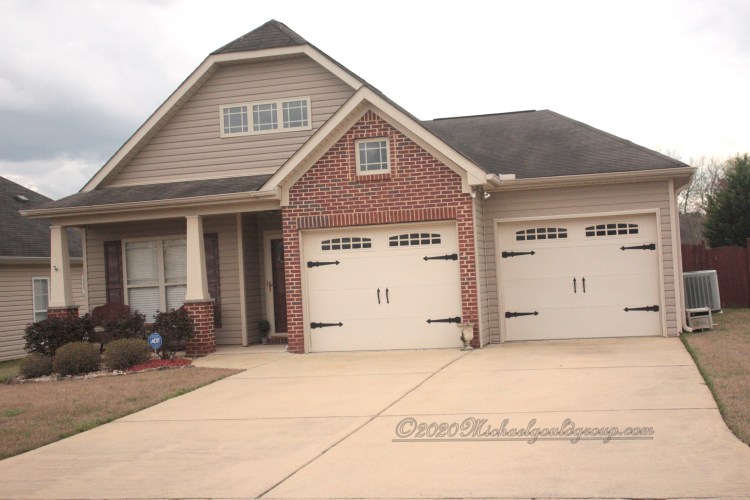






 MichaelGouldGroup.Com
You must be logged in to post a comment.